Showing posts with label cannabis cures. Show all posts

Friday, October 7, 2016

PARKINSON'S DISEASE


As of October 2015 - States That Have Approved Medical Marijuana for Parkinson’s Disease

Currently, 10 states have approved medical marijuana for the treatment of Parkinson’s disease. These states include Connecticut, Georgia, Illinois, Maine, Massachusetts, New Hampshire, New Mexico, New York, Ohio and Pennsylvania.
A number of other states will consider allowing medical marijuana to be used for the treatment of Parkinson’s disease with the recommendation from a physician. These states include: California (any debilitating illness where the medical use of marijuana has been recommended by a physician), Nevada (other conditions subject to approval), Oregon (other conditions subject to approval), Rhode Island (other conditions subject to approval), and Washington (any “terminal or debilitating condition”).
In Washington D.C., any condition can be approved for medical marijuana as long as a DC-licensed physician recommends the treatment.
In addition, several states have approved medical marijuana specifically to treat “chronic pain,” a symptom that can arise in people with Parkinson’s. These states include: Alaska, Arizona, California, Colorado, Delaware, Hawaii, Maine, Maryland, Michigan, Montana, New Mexico, Ohio, Oregon, Pennsylvania, Rhode Island and Vermont. The states of Nevada, New Hampshire, Ohio and Vermont allow medical marijuana to treat “severe pain.” The states of Minnesota, Ohio, Pennsylvania and Washington have approved cannabis for the treatment of “intractable pain.”
Also, 17 states have approved medical marijuana specifically for the treatment of nausea, which can develop from medications used to treat Parkinson’s. These states include: Alaska, Arizona, California, Colorado, Delaware, Hawaii, Maine, Maryland, Michigan, Montana, Nevada, New Hampshire, New Mexico, Oregon, Rhode Island, Vermont, and Washington.

Source: Medical Marijuana Inc


Effects of cannabidiol in the treatment of patients with Parkinson's disease: an exploratory double-blind trial.      https://www.ncbi.nlm.nih.gov/pubmed/25237116

Cannabis (medical marijuana) treatment for motor and non-motor symptoms of Parkinson disease: an open-label observational study.  https://www.ncbi.nlm.nih.gov/pubmed/24614667


Studies on Cannabis and Parkinson's Disease


Study Name, Description & Year


Saturday, April 23, 2016

Cannabis Is In Your DNA

Please Share This Video Far and Wide
For A More Fully Informed Public


Watch on YouTube: https://youtu.be/aWXuaMXfbJA

Published on Apr 22, 2016

The nutritional and healing powers of fresh raw Cannabis is one of of the best kept secrets of the last century. Because Cannabis is, essentially, a wonder plant, it was only a matter of time before the anti-cannabis propaganda machine would fall apart. That is what is happening today. This video calls out the "authorities" who do nothing but harm the public for enrichment and corruption of the state.

https://www.youtube.com/watch?v=qgEP9... (Dr. William Courtney, Cannabis Therapies)

https://www.youtube.com/watch?v=DttdD... (How Cannabis Cures Cancer)

https://www.leafly.com/news/health/a-...

https://www.youtube.com/watch?v=VsDic... (Documentary on Cannabis)

http://www.naturalnews.com/035759_can...

http://montanabiotech.com/2011/03/26/...

Excellent documentary on Cannabis from British Columbia
https://www.youtube.com/watch?v=N1F2N...

Saturday, March 7, 2015

Phytocannabinoids in the Treatment of Melanoma

Study: Cannabinoids Found in Cannabis May Decrease the Viability of Melanoma Cells

An in-vitro and in-vivo study published in the Journal of Investigative Dermatology in February 2015 found that treatment with delta-9-tetrahydrocannabinol (THC) and cannabidiol (CBD) helped to decrease the viability of melanoma cells.

Cells perform autophagy, a process designed to clean out intracellular debris (e.g. old cell parts [organelles], proteins that are no longer needed, etc.) with the help of lysosomes (organelles that contain enzymes that help to break down proteins, fats, sugars, DNA and RNA building blocks, etc.). Previously collected evidence has shown that in the first phases of cancer development, autophagy is useful in helping to prevent cancerous growth. However, in later stages, autophagy may actually contribute to the formation of cancer by providing resources to cancer cells that help in maintaining survival. In this study, researchers explored whether or not cannabinoids could induce apoptosis (i.e. programmed cell death), and what role autophagy played in this induction, in melanoma cells.

What is Melanoma?

Melanoma is a type of skin cancer, caused by an overproliferation of abnormal melanocytes (cells of the skin that produce melanin, a skin pigment), and is often the result of damage caused by the sun’s UV rays. Although cell abnormality begins in the skin, in later, more advanced stages, cancerous cells can metastasize (i.e. invade distant organs), causing extensive damage and, if uncontrolled, death.
doyou
Other types of skin cancer include basal cell carcinoma (BCC) and squamous cell carcinoma (SCC), and melanoma. Although melanoma cases make up only 2% of skin cancer cases, due to the fact that death as a result of BCC is highly unlikely and as a result of SCC is fairly unlikely given that skin lesions grow large and painful (helping in early diagnosis), melanoma is the leading cause of skin cancer deaths. According to the American Cancer Society, in 2014, about 76,100 new melanoma cases were expected to be diagnosed, and about 9,710 people were expected to pass away as a result of melanoma.

In men, melanoma most commonly occurs on the chest and back, and in women, the most common site is the legs. Melanoma is also frequently found on the neck and face.

Skin cancer is much more common in individuals with lighter skin, who have less melanin. However, it is vital that individuals with darker skin tones also be regularly monitored by their health care provider for skin cancer (because it is often assumed that individuals with darker skin will not get skin cancer, when indeed present, the skin cancer is often diagnosed at a late stage, when chances of remission [i.e. cancer non-detectable] are less likely).

Melanoma cases have been rising over the past 30 years. While new discoveries are helping to increase success in the treatment of melanoma, some patients do not respond. Therefore, development of novel treatment options are imperative in helping to increase remission rates for patients with melanoma, especially since melanoma cases are increasing.

How Can You Detect Melanoma?

The most effective way to detect melanoma is to attend annual visits with your dermatologist, who will monitor any unusual or new growths and perform biopsies on skin lesions that have the potential of being skin cancer. Individuals with a family history of melanoma should especially make sure to schedule and attend these yearly visits.

In between visits, it is important to self-monitor your skin (using another person’s help for locations that are hard to see yourself, if possible). Make sure to check all of your skin, including behind your ears, the palms of your hands and soles of your feet, between fingers and toes, under nails, on your scalp, eyelids, and around your genitals and anal region. Frequent self-monitoring will make it easier to notice when a growth seems unusual.

stages
You can use the following guidelines to determine whether or not a mole or patch may need further evaluation by a health care provider:
  • A is for Asymmetry: One half of a mole or birthmark does not match the other.
  • B is for Border: The edges are irregular, ragged, notched, or blurred.
  • C is for Color: The color is not the same all over and may include shades of brown or black, or sometimes with patches of pink, red, white, or blue.
  • D is for Diameter: The spot is larger than 6 millimeters across (about ¼ inch – the size of a pencil eraser), although melanomas can sometimes be smaller than this.
  • E is for Evolving: The mole is changing in size, shape, or color.
  • Other warning signs are:
    • A sore that does not heal
    • Spread of pigment from the border of a spot to surrounding skin
    • Redness or a new swelling beyond the border
    • Change in sensation – itchiness, tenderness, or pain
    • Change in the surface of a mole – scaliness, oozing, bleeding, or the appearance of a bump or nodule
If you find a spot that may be abnormal (in accordance with the above guidelines, or unusual/different from your other skin markings in any other way) make an appointment with your dermatologist. Sometimes skin lesions look a little strange, but end up being benign (i.e. not harmful), but the only way to be certain is to visit your dermatology-trained health care provider. Catching melanoma early, before it has the potential to spread to other organs, is essential in increasing chances of remission and decreasing chances of death as a result of melanoma.

Results of the Study

Studying human melanoma cells in-vitro (i.e. outside of the body), researchers found that administration of THC helped to increase melanoma cell death by way of autophagy-dependent apoptosis, possibly by way of the following pathway:
  • THC leads to creation of a fat called sphingolipid ceramide.
  • Sphingolipid ceramide leads to (1) stress on the endoplasmic reticulum (ER; the smooth ER is a part of the cell involved in lipid and carbohydrate metabolism, as well as detoxification, and the rough ER is a part of the cell involved in protein synthesis) and (2) prevention of the Akt/mTORC1 signaling pathways (which prevent apoptosis by inhibiting autophagy, and lead to increased protein production, helping to keep cells alive and functioning properly) through activation of the protein TRIB3.
  • This stress and prevention of pathways leading to increased cell survival may lead to increased death of melanoma cells.
The researchers note, “when lower doses of THC are combined with CBD the anti-tumour effect was enhanced in vitro”. While the use of THC alone helped to decrease melanoma cell survival, use of a caspase inhibitor (i.e. an agent that prevents activation of enzymes that induce apoptosis) helped to increase melanoma cell death even further. Importantly, while THC helped to increase cell death in melanoma cells in a dose-dependent manner (i.e. the higher the concentration used, the more cell death that occurred), there was no increase in cell death in normal melanocytes (up to a THC concentration of 6 µM, which is beyond the concentration needed to induce cancer cell death). Therefore, THC treatment destroyed abnormal/cancerous melanocytes, but, importantly, did not destroy normal cells.

Using mice as models for humans with melanoma, researchers evaluated the use of whole-plant cannabis extract with a 1:1 ratio of THC (similar to Sativex) for the treatment of BRAF wildtype melanoma, which is a form of the disease that has limited treatment options. They found that treatment with the 1:1 THC:CBD extract, at a concentration of 1 µM of each, helped to decrease melanoma cell survival, even more than treatment with THC alone. In contrast, temozolomide, a chemotherapy agent used to treat glioblastoma multiforme, had a small effect. According to the researchers, “Collectively these data suggest THC and Sativex-like are more effective than temozolomide in terms of apoptosis induction and anti-tumour response, further validating the therapeutic relevance of cannabinoid treatment for melanoma.”

These results are particularly impressive given that alkylating agents, like temozolomide (that work by damaging DNA), although effective in reducing cancer cell growth/increasing cancer cell death in certain types of cancer, can have severely harmful side effects, which may include the formation of new types of cancer. The use of cannabinoids, on the other hand, has been shown to be generally well-tolerated with minimal negative side effects.

Additionally, according to the researchers, “CBD induces apoptosis via the production of reactive oxygen species [agents that cause cell and tissue damage] and caspase activation in cancer cells… indicating THC and CBD engage different molecular machinery which cooperate to promote tumour cell death.”

Conclusion

These results add to a growing body of evidence that suggests that cannabinoids may be useful for the treatment of various types of cancer (breast, prostate, lung, skin, pancreaticbrainbladder cancer, leukemia). Specifically, they demonstrate that the use of phytocannabinoids may be useful in the treatment of both BRAF-mutated and BRAF-wildtype (i.e. “normal” BRAF) melanoma. This is especially important for patients with BRAF-wildtype melanoma, given the limited treatment options for this form.

In contrast to alkylating agents used in chemotherapy treatment, phytocannabinoids have so far shown to have a highly favorable safety profile, which provides an additional rationale for increasing research on whether or not cannabinoid therapies are effective for the treatment of cancer, including melanoma.

Source and Full Story: http://www.medicaljane.com/2015/02/18/whole-plant-cannabis-extract-in-the-treatment-of-melanoma/


Friday, July 5, 2013

BRAVE MYKAYLA'S STORY

UPDATE & MESSAGE FROM BRAVE MYKAYLA


Childhood Cancer, Cannabis and Courage: How Mykayla Comstock Became Brave Mykayla


Life before Mykayla was diagnosed with cancer was peaceful. We lived in Eastern Oregon and were an average family living life day to day making ends meet. Erin and I worked from home and took care of Mykayla and Ryleigh. Erin was an ambitious, driven entrepreneur who spent a lot of time promoting and working on her small hemp jewelry business, PeaceLove&Knots. We enjoyed traveling and going to concerts and festivals. I was in between jobs at the time, so I worked odd jobs and grew Cannabis. We spent our days together raising the kids.


Mykayla loved to go to school, and we enjoyed focusing our time on her extracurricular activities. I will never forget the day that I got the news, Friday, July 13th, 2012. I stayed home with Ryleigh while Erin went with her mother to take Mykayla to a second visit with her pediatrician. During our last visit, he thought she was lactose intolerant; we subsequently removed dairy from her diet, yet she only got progressively worse; it was time for some answers. I tended our garden and played with Ryleigh until she fell asleep, I couldn’t wait until the girls got home… I had missed a call from Erin at the doctor’s office, I played the voicemail guessing that we had an answer, instead I heard these words, “Brandon, I’m so scared, they discovered a mass in Mykayla’s chest, they want to follow with a CT-scan, we’re headed to radiology right now; I will call soon.”
Listening to that message left me in a stone-cold panic. A mass, what was it? She had been bitten by a tick earlier in the spring; we considered the very worst it could be was Lyme disease, and that was terrifying on its own. There was something in Erin’s voice, though, that chilled me, so I began packing bags. I paced and paced until she called again; she told me the worst news; we had to travel immediately to the nearest children’s hospital. The possibilities were grim.
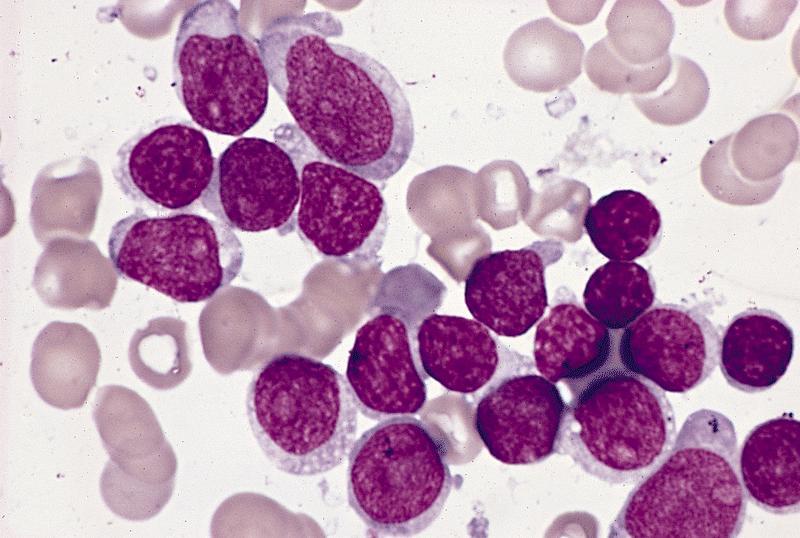
Mykayla was officially diagnosed with T-Cell Acute Lymphoblastic Leukemia on July 14, 2012, at only seven years old.  T-cell ALL is a rare form of leukemia. It is an aggressive and fast-acting form of the childhood cancer. It is a cancer that is caused by the uncontrolled proliferation of Lymphoblasts into the body from the bone marrow. Lymphoblasts are immature cells which typically differentiate to form lymphocytes. Normally, lymphoblasts are found in the bone marrow only. These cells do not have the capability to die. Instead of going through a normal cellular life cycle, they remain, never succumbing to the natural programmed cell death. Instead, they are left to group together, forming a giant, liquid mucinous tumor that puts immense pressure on internal organs and wreaks havoc on a child’s immune system.
Mykayla’s official Medical Prognosis is a 76.9% 5-year survival rate, with modern treatment protocols. At the time of her diagnosis, many of the classification markers were to her benefit, though she was ultimately deemed intermediate risk due to central nervous system (CNS) involvement.
Some common classifying and identifying clinical markers:
  • ·         Age at diagnosis, gender, and race.
  • ·         The number of white blood cells at diagnosis.
  • ·         Whether the leukemia cells began from B lymphocytes or T lymphocytes.
  • ·         Whether there are certain changes in the chromosomes of lymphocytes.
  • ·         Whether the child has Down syndrome.
  • ·         Whether the leukemia has spread to the CNS (central nervous system), i.e. brain and spinal cord, or testicles.
  • ·         How quickly and how low the leukemia cell count drops after initial treatment.
Currently, Mykayla’s cancer is in complete remission. However, she is still required to undergo standard chemotherapy regimens for two more years; her diagnosis requires a three year chemotherapy and radiation protocol in total.
Acute Lymphoblastic Leukemia
We were told that Mykayla was ill with leukemia for approximately six weeks prior to her diagnosis. During those six weeks she suffered from intense exhaustion and fatigue. She barely had enough energy to live life day to day; she did not smile anymore, barely laughed at all. She had fevers and spotty rashes; she was constantly coughing; she experienced severe stomach pain, a relentless lack of appetite, and at nighttime her frail body turned cool while drenching her bed with sweat. At times, Erin would walk into her room while she was sleeping just to watch her breathing, it was labored, and we became terrified of losing her.
 
The mass in her chest had already gotten so large that they were unable to put her under anesthesia due to the risk of the mass crushing her airway and causing death. She had to undergo a PICC line placement along with several other procedures with nothing to comfort her but a small dose of anti-anxiety medicine. The pain was excruciating for her. She spent several days in the pediatric intensive care unit fighting for her life as the mass blocked valves in her heart and caused fluid to build up around it.
The oncologists told us that with leukemia the children tend to go into remission just a few days after starting chemotherapy. They also told us that her particular mass should be completely gone with just a day or so of steroid treatment.  This did not happen for Mykayla. Days went by; the lymphoblasts were still being discovered in her blood smears. Her bone marrow was still saturated with leukemia. The oncologist came to us and discussed the possibility of a bone marrow transplant if the leukemia continued to persist despite the chemotherapy and steroids.
When faced with the horrors of chemotherapy, steroid therapy, and now cranial radiation; we knew that it was imperative that we get Mykayla her Oregon Medical Marijuana Program Card (OMMP) so she could legally use Cannabis in Oregon. As soon as we had a chance, we asked Mykayla’s head oncologist for a confirmation letter stating her diagnosis. We needed this in order to obtain her approval for Cannabis use. That day after our appointment at the cancer clinic, Mykayla had her appointment at The Hemp and Cannabis Foundation (THCF) in Southeast  Portland; Mykayla was approved to use medical cannabis ten days post diagnosis. We began using whole cannabis extract oil that very day.

We were officially initiated into our learning experience with cannabis and children; finding the correct dosage was very difficult at first; even the recommended “grain of rice” dose delivered a very strong psychoactive effect. One thing that saved us from panicking when Mykayla was visibly “stoned” was that she finally had a smile on her face for the first time in weeks. She felt hunger and actually wanted to eat; she told me time and time again how happy she was, and laughter uncontrollably poured from her. After going countless days without seeing our little girl happy and smiling, seeing the happiness, watching her smile and hearing her laugh was just as good as hearing she finally achieved remission seven days after starting Cannabis oil. Cannabis truly saved Mykayla from so much pain and sickness, both emotionally and physically.
Thinking back to the first dose, I can recall filling a capsule with the thick, dark oil, thinking to myself, I hope this works. I wondered if we would lose our girls to the state over giving Mykayla Cannabis as a medicine. Would we be in for a fight about Cannabis with Children’s Protective Services? I wondered what her nurses and doctors would think. What would we do if we were ousted by them and forced to seek treatment elsewhere? What would our hospital social worker think? What about Mykayla’s biological father; would he attempt to get custody of her over this? Would he be awarded custody?  After a diagnosis as grim as Mykayla’s it was hard not to  consider everything as a potential  catastrophe. There are many unknowns when it comes to childhood cancer. After beginning Cannabis Treatment we were given stunning news; Mykayla’s cancer was in remission!
Here is a listing of Mykayla’s Lymphoblast counts from day one, July 14th 2012, on to August 20th 2012. This is amazing medical proof of Mykayla benefiting from Cannabis

Date Of Test      Lymphoblast count-Blood Smear
Diagnosis 14-Jul                                     33%

15-Jul                                                      51%

16-Jul                                                      11%

17-Jul                                                      14%

18-Jul                                                      16%

19-Jul                                                      3%

20-Jul                                                      29%

23-Jul                                                      31%

24-Jul                          Began Cannabis Oil

26-Jul                                                      5%

30-Jul                                                      3%

2-Aug                                                      0%

6-Aug                                                      0%

13-Aug                                                    0%

20-Aug                                                    0%

July 30th 2012 was the very last time they found lymphoblasts in Mykayla's blood smear
The very next time we saw the oncologist they told us Mykayla was in remission As if her dramatic remission wasn’t amazing enough, Erin and I have observed a wide variety of benefits from Cannabis during Mykayla’s treatment. Cannabis has relieved nearly all of the horrid side-effects that we are warned about with each individual chemotherapy drug. Mykayla has experienced nausea, yes; though we are able to mitigate the nausea rapidly with crystallized ginger candies. Mykayla has needed the pharmaceutical anti-nausea medicine, Zofran, only a handful of times . She rarely, if ever, complains of pain anywhere; she hasn’t experienced the chemo-associated neuropathy (foot-drop) that seemingly every child experiences when given Vincristine.
 
Another testament to the power of Cannabis is that Mykayla has currently experienced only one infection. We know that Cannabis is a powerful anti-biotic, anti-viral, and anti-fungal agent, our family has experienced this. Children who are undergoing chemotherapy are very immune compromised and as a result experience many hospitalizations due to infection. Mykayla’s one infection came at a time when a bad reaction to the anti-biotic Dapsone caused her body to be unable to produce new cells, which kept her neutropenic and immune suppressed to the point that brushing her teeth gave her an infection  that required hospitalization and IV antibiotic protocols. When it comes to Mykayla, you truly wouldn’t know she being treated for T-Cell ALL, except for her chemo related alopecia (hair loss). Her spirits are always high, and she is always energetic. She continues to be creative and inquisitive despite the rigors of her treatment. Her mother and I attribute the majority of this to Cannabinoid Therapy.
Mykayla never smokes Cannabis as we do. She instead uses Cannabis in many other forms such as, Whole Extract Cannabis Oil, Infused Agave Nectar, infused medibles, Holy anointing oil, and Raw Cannabis juicing. Along with Cannabis use and supplementation, we all conform to a very strict diet. Our family has chosen to quit eating meat; we also refuse to consume high fructose corn syrup (HFCS). We avoid additives, preservatives, and anything artificial. Genetically modified foods are not welcome in our diet either; we eat Organic. 
We have been supplementing ourselves with a plethora of vitamins and nutrients such as CoQ10, Selenium, Milk Thistle, Echinacea, Vitamin A, B, C, D, Acetyl-L Carnitine, Alpha-Lipoic Acid, green tea extracts, and more. Our family believes that a wholesome, healthy diet, a positive attitude, and a happy life full of love and good energy along with cannabinoid saturation is the key to longevity and survival in this toxic modern world. We personally agree with the hypothesis that cannabis is a missing vital human nutrient. You can find further information, videos, and more on Mykayla’s website at, www.bravemykayla.com or find her and her family on Facebook at, www.facebook.com/bravemykayla

Because of Cannabis, were able to avoid the required cranial radiation treatments. Erin and I poured through research articles concerning leukemia and radiation treatments. We quickly found that the benefits did not outweigh the risks of subjecting Mykayla to radiation. The oncologists refused to agree with us.  One oncologist admitted the radiation recommended was actually not therapeutic treatment but instead prophylactic. Erin and I were dumbfounded that these doctors would recommend a treatment that was not even necessary. Amazingly enough, St. Jude’s Children’s hospital no longer treats leukemia patients with radiation unless they are at high-risk for relapse or if they have already relapsed. St. Jude’s is world renowned for being pioneers in children’s cancer treatment. As parents we stood our ground; There would be no radiation used on our daughter unless it absolutely couldn’t be avoided. The oncologists eventually acquiesced once they realized that we had powerful information supporting our position. Mykayla received no radiation.


Oncologists who treat Mykayla and other doctors and nurses have not volunteered their opinions. Ourfirst oncologist constantly disagreed with us and eventually tried to forcibly refer us to another hospital, the reason being that she felt little Mykayla jeopardized the entire hospital including staff and patients. Some have actually asked that we refrain from discussing their opinions with the media or anyone else at all. The few testimonies we have coaxed out of them are always fantastic. They have commented on how well her liver holds up during the hepato-toxic treatments they prescribe her. They see how smart and sharp she is through the neuro-toxic drugs regimens. They comment on how astonishing it is that she maintains her weight, never losing any for more than a day or two at a time. We know they know.
We know that they see the difference. They see her giggle, run, dance, jump, and play, be hungry and want to experience life. Some nurses who have worked those wards for 15+ years have commented on how they have never before seen a child undergo so many poisonous treatments and handle it so well. They know she doesn’t have to take the seven prescription medications that she is offered for side-effect mitigation. Some medicines we have never used; they sit unopened in our cupboards just in case. Simply put, Cannabis has been a miracle for Mykayla; no one can argue this anymore, there is nothing left to debate.---

Cancer Doesn’t Have To Be So Scary